
ProdCollab
A music studio in the browser where the project is a shared document, the way a Figma file is.
The problem
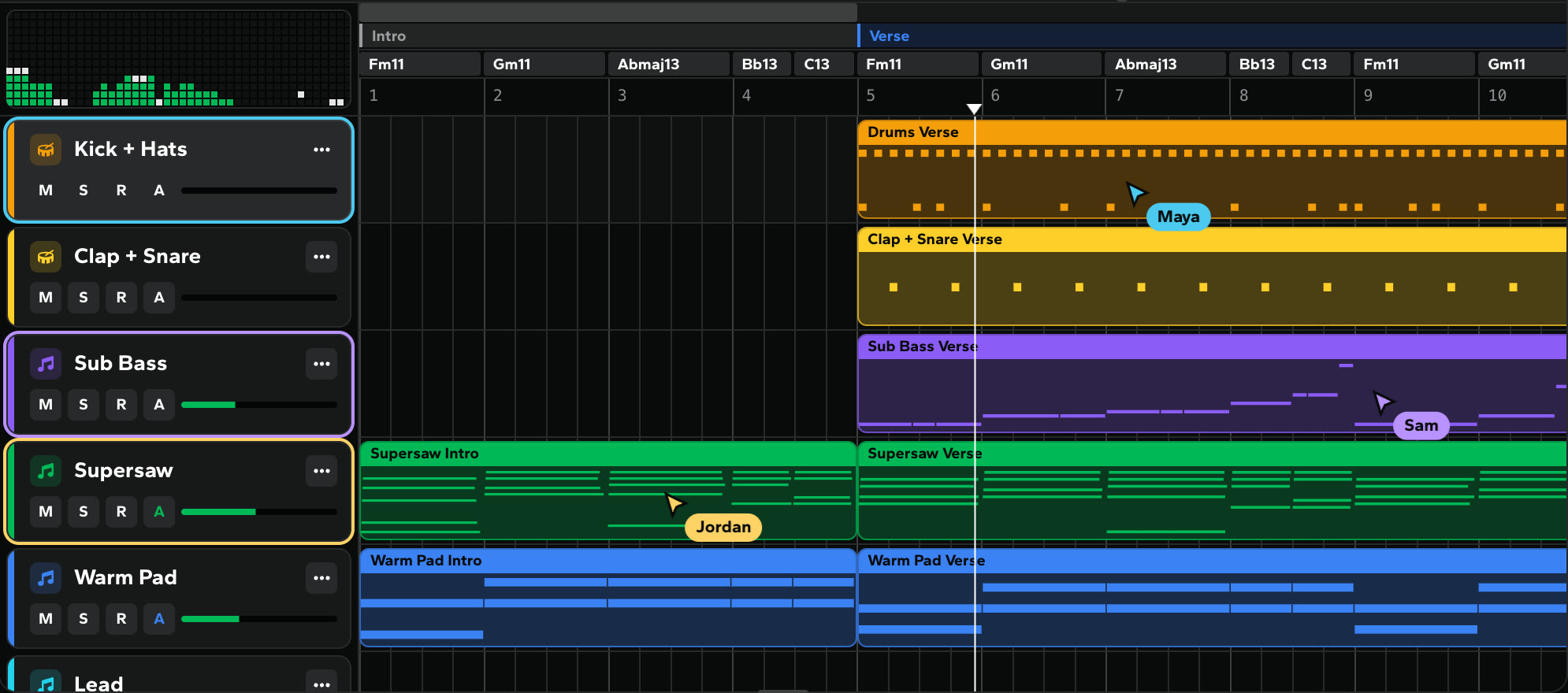
Most of the creative tools I use went multiplayer years ago. Producing a track with someone else still tends to mean exporting stems, zipping a project folder and hoping the other person owns the same plugins.
I make music, and I wanted the session itself to be the thing you share: open a link, land in the same project, hear the same song.
User research
My brother is a Billboard-charting producer and ProdCollab's co-founder. His credits include “3AM in Oakland” by Karri and “BADGRRRL” by LISA. He has shaped the product from the start: which steps of a session matter, where producers lose time, and how the flow should feel to someone who does this for a living.
He also put the app in front of other producers in his network. Two things came up again and again.
“This saves so much time and money. Studio fees can get expensive.”
Producer, early tester
“Being able to work at the same time without having to send zip files back and forth is a game changer.”
Producer, early tester
What studio time costs
The first quote is about real money. In Los Angeles, a four-hour session in a mid-tier room runs $300 to $1,000 before anyone has finished a song, and every collaborator has to be in that room for it to count.
Los Angeles rates for 2026, from Paradise Recording.
Where it started
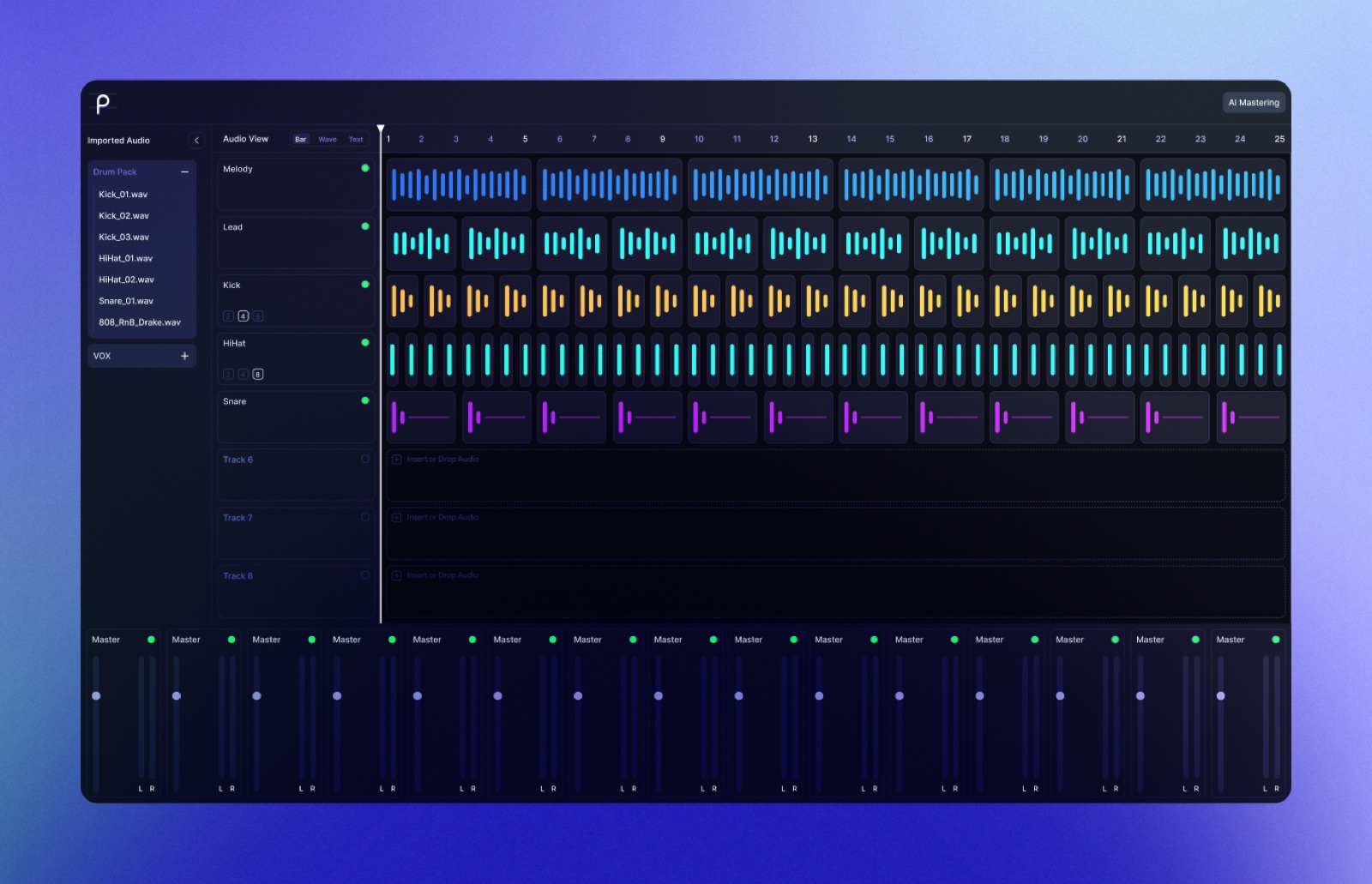
ProdCollab began in June 2024 as a Figma concept and a small Next.js prototype: a waveform timeline with shared cursors. It was enough to prove the idea was worth chasing, and to show how far a prototype is from an instrument.
The rebuild
I rebuilt the studio around a core written in Rust. The audio engine compiles to WebAssembly and runs on the audio thread of each browser tab, so every person plays the project with their own copy.
The project is a document made of small objects. Edits apply instantly where they are made, a server puts them in order and passes them on, and audio never has to leave the tab.
Inside the studio
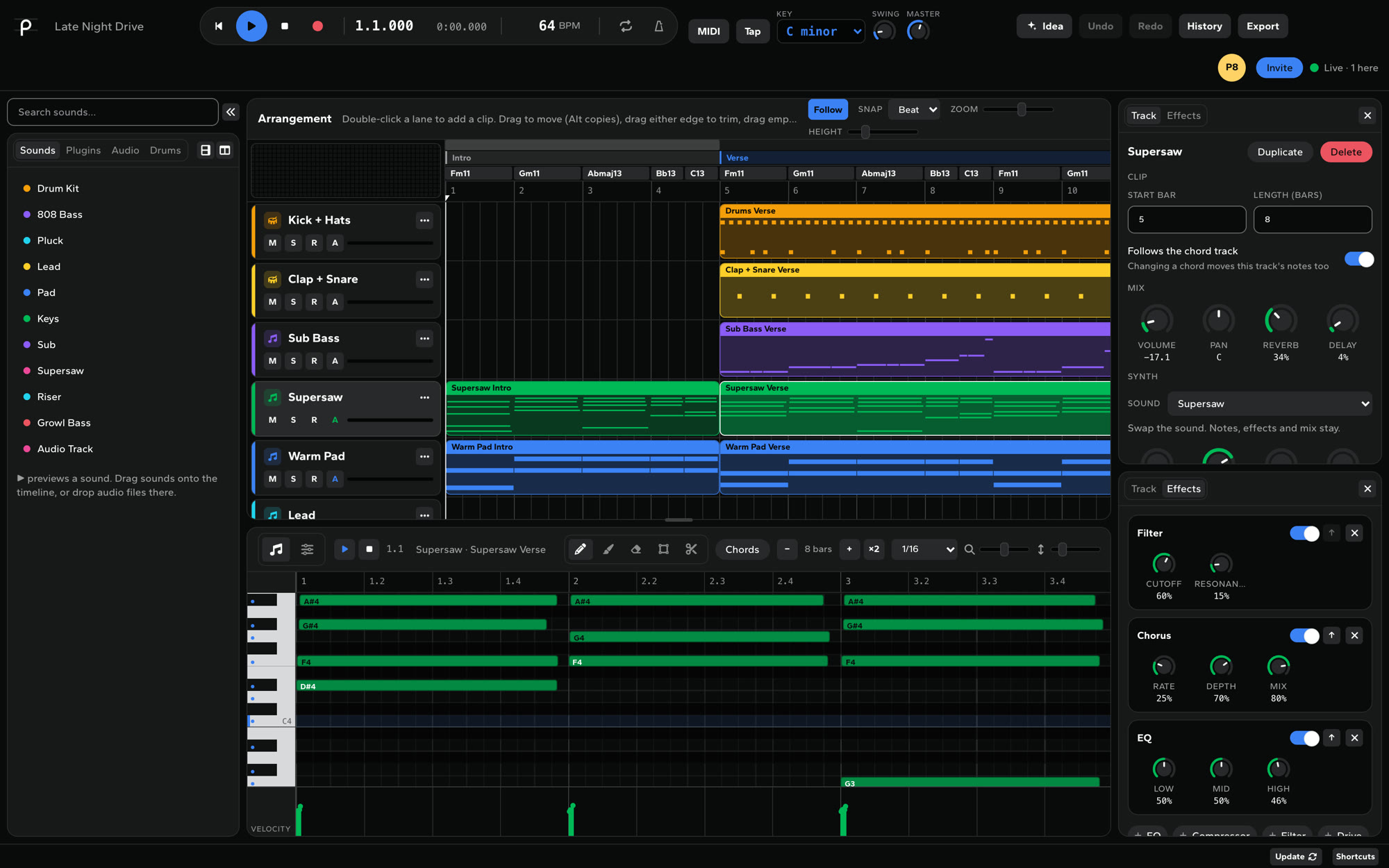
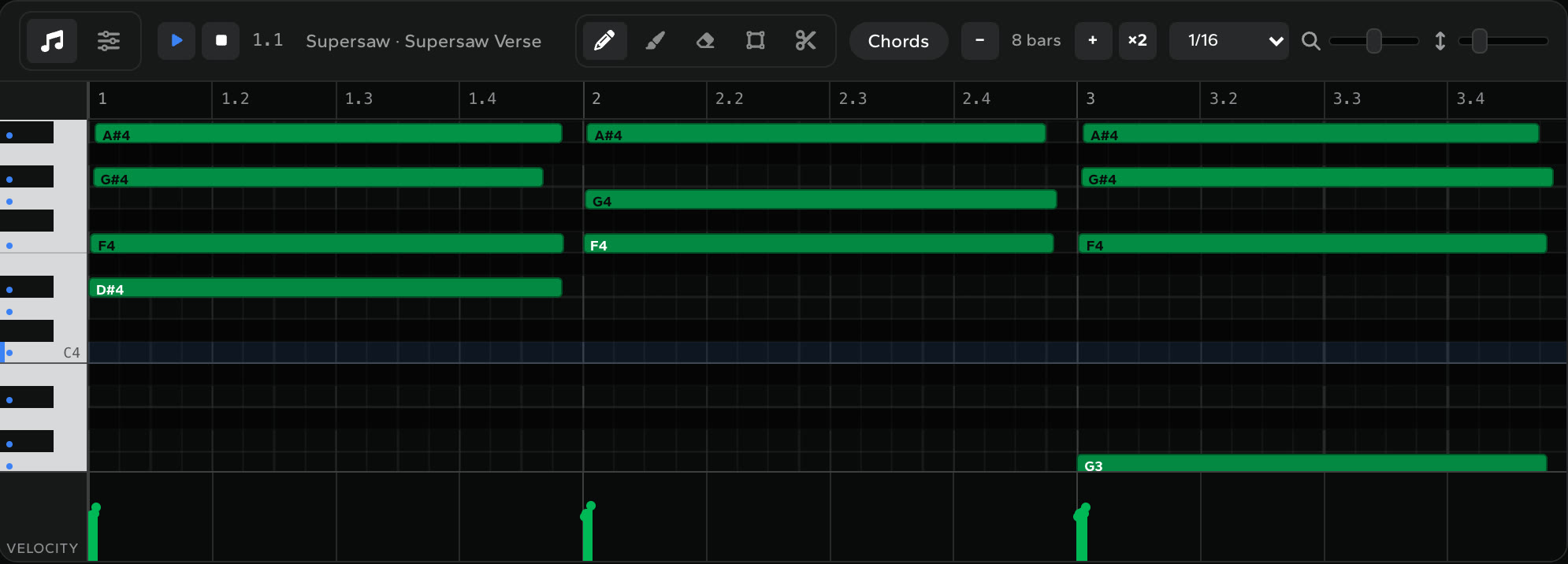
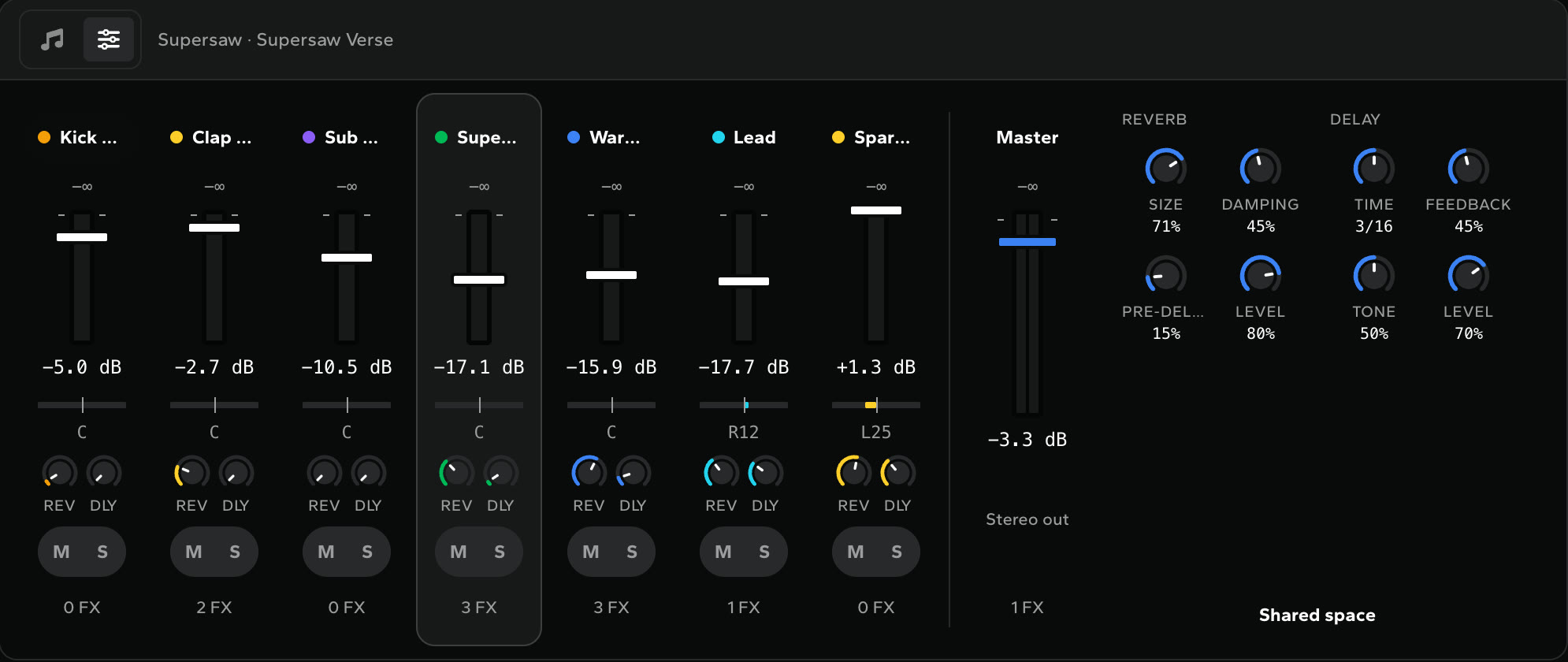
One window holds the whole song: the arrangement on top, the editor for whatever you have selected underneath, and the sound and effects for that track on the right.
Where it is today
A working studio you open with a link.
There is more in the studio than this page shows. The rest stays under wraps until launch.
Want to try it?
The studio is invite-only while it is in development. Ask and I'll send you the link.
How I work on it
I design the studio and build it, with Claude Code as a pairing partner. A design system lives beside the app, and every interface change lands in both.
Sound gets the same treatment as layout. Levels are set from measurements, and tests listen for musical mistakes the way other tests catch broken code.
Want to hear more?
I'm happy to walk through the studio and how it was built.